Summer Horse Racing Betting Guide
Summer Horse Racing Betting Guide: Saratoga and Beyond
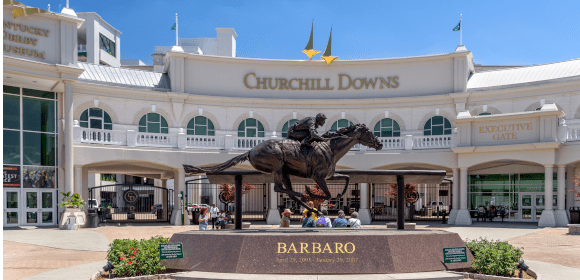
After Churchill Downs to Belmont: Finding Value in America's Summer Racing Season
For many racing fans, the Triple Crown is the main event. The Kentucky Derby, Preakness Stakes and Belmont Stakes dominate the headlines and generate huge betting turnover. But once the Triple Crown is over, some of the best wagering opportunities of the year begin to emerge.
As the focus shifts from Churchill Downs to the summer meetings at Saratoga, Del Mar and beyond, bettors are presented with a fresh set of challenges—and opportunities. New tracks, different race conditions and developing horses - this is where following horse racing becomes valuable and will create value for those willing to look beyond the obvious.
Don't Get Stuck in Triple Crown Thinking
One of the biggest mistakes bettors make is assuming the Triple Crown races tell us everything we need to know about a crop of three-year-olds.
In reality, many horses improve significantly after the spring classics are over. Some simply mature later, while others are better suited to different distances or race conditions. A horse that struggled in the Kentucky Derby may prove a much better proposition later in the summer after a short break and a more suitable assignment.
The public often remains focused on the headline horses, creating opportunities elsewhere. A Derby winner or Belmont contender will naturally attract attention at the betting window, but smart punters should be asking a different question: which horse is still improving?
Often it's the horse that has flown under the radar rather than the one that made the headlines in May.
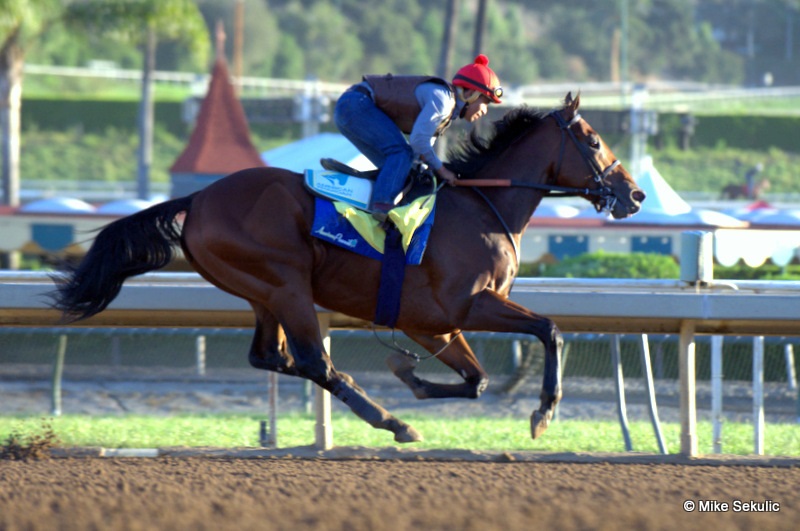 American Pharoah won the American Triple Crown in 2015, becoming the first horse to do so in 37 years.
Fresh Horses Can Be Dangerous
Unlike many horses in Britain, top American dirt performers are often campaigned quite lightly.
A trainer may target a horse at the Kentucky Derby in May, give it a break, and then bring it back for a summer campaign aimed at races such as the Jim Dandy Stakes or Travers Stakes.
That means a horse returning from a six or eight-week absence isn't necessarily lacking fitness. Quite often the break has been carefully planned and the horse may be ready to produce a career-best effort.
In fact, one angle worth watching is the so-called "Triple Crown hangover". Horses that have contested all three Triple Crown races have often been through a demanding campaign.
Meanwhile, fresher rivals that skipped one or more of those races may arrive at Saratoga with plenty left in the tank.
Saratoga: The Graveyard of Champions
Few tracks in North America are as fascinating—or as challenging—as Saratoga Race Course.
Nicknamed "The Graveyard of Champions", Saratoga has a long history of producing shock results and upsetting heavily-backed favourites. Many great horses have been beaten there when expected to win.
Part of the challenge is that Saratoga races differently from Churchill Downs. Track position can be crucial and horses with tactical speed often enjoy an advantage. Deep closers can still win, but they frequently need everything to fall perfectly.
For bettors, it pays to pay close attention to how races are being won during the meeting.
Ask yourself:
- Are front-runners proving difficult to catch?
- Are inside draws helping or hindering runners?
- Is the track favouring horses racing close to the pace?
These patterns can change throughout the meeting, particularly after rain or periods of intensive racing, so keeping notes can provide a valuable edge and keep this "Summer Horse Racing Betting Guide" to hand.
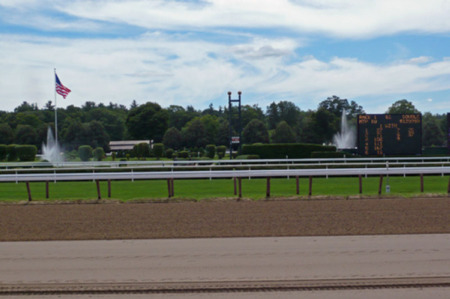 Saratoga Racetrack - Graveyard of Champions
Follow the Major Summer Stakes
The weeks after the Belmont Stakes are packed with high-quality racing.
One of the most important races on the calendar is the Travers Stakes, often referred to as the "Mid-Summer Derby". Run over 1¼ miles at Saratoga, it regularly attracts the best three-year-olds in training and often reveals the horse that will dominate the second half of the season.
If the Kentucky Derby crowns the spring champion, the Travers often identifies the autumn champion.
The Jim Dandy Stakes, run a few weeks before the Travers, is another race worth studying closely. Many trainers use it as a stepping stone rather than a target, meaning horses can improve significantly from their Jim Dandy run to the Travers itself.
Elsewhere, races such as the Haskell Stakes at Monmouth Park and the Pacific Classic at Del Mar help shape the national championship picture and often feature horses following very different routes through the season.
 Del Mar Racetrack
Trainers Matter More Than Many Bettors Realise
Horse form is important, but trainer patterns can be just as revealing.
Some trainers consistently excel during the summer months and have a proven ability to prepare horses for specific targets.
Chad Brown has become synonymous with success at Saratoga, particularly with turf runners and horses making their second start after a layoff.
Todd Pletcher has a reputation for bringing three-year-olds along steadily through the summer, often improving horses as distances increase.
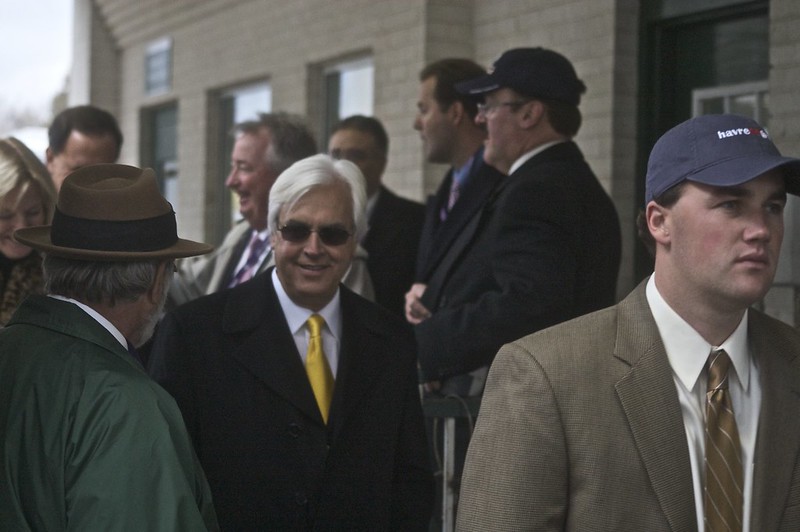 Trainer Bob Baffert
Brad Cox has developed a formidable record with lightly-raced horses stepping into graded company, while Steve Asmussen remains one of the most reliable handlers of older dirt performers and sprinters.
Rather than simply looking at a horse's recent finishing positions, it often pays to ask what the trainer's plan might be.
Has this race been the target all along?
Is the horse likely to improve for the outing?
Or is the trainer using the race as a stepping stone to something bigger?
Trainer and Jockey Partnerships
One of the strongest angles in American racing is the trainer-jockey combination.
Partnerships such as Chad Brown and Flavien Prat, Todd Pletcher and Irad Ortiz Jr., or Brad Cox and Florent Geroux have built impressive records over many seasons.
When these established combinations appear on horses that fit their usual profile, bettors should take notice.
Strong partnerships often indicate confidence, familiarity and a clear plan. The jockey understands exactly how the trainer wants the horse ridden, while the trainer trusts the jockey to execute the race strategy.
That understanding can make all the difference in a competitive stakes race.
Don't Ignore Workout Reports
Workout information plays a much bigger role in American racing than many UK punters realise.
A series of sharp workouts before a race can signal that a horse is thriving after a break.
Particularly noteworthy are "bullet" workouts, where a horse records the fastest time at a given distance on that morning.
While workout times should never be viewed in isolation, they can provide useful clues about fitness and trainer intent, especially when combined with positive comments from the stable.
Listen Carefully to Trainer Comments
Trainer interviews can often provide valuable insights that don't appear in the formbook.
Phrases such as:
"He's really moved forward."
"We've targeted this race."
"He's training better than ever."
are generally positive signs.
By contrast, comments such as:
"He may need the race."
"This is a stepping stone."
"We'll learn more after this run."
can suggest that peak fitness or a major target lies further down the road.
Experienced bettors pay close attention to these interviews because they often reveal a trainer's expectations before the market fully reacts.
Watch the Market
Finally, don't underestimate the value of market signals.
When a horse from a leading stable shortens noticeably in the betting shortly before post time, it can sometimes indicate stable confidence rather than simply public support.
This is particularly true in graded stakes races where connections have been working towards a specific target for months.
No betting move guarantees success, of course, but significant late support for a horse from a powerful stable is often worth investigating.
Concluding Our Summer Horse Racing Betting Guide
The period between the Triple Crown and the major autumn championships offers some of the most rewarding betting opportunities of the racing year.
So put your Summer Horse Racing Betting Guide to good use looking beyond the headline horses, monitoring trainer and jockey patterns, studying track biases and paying attention to how horses are being campaigned. In this way, as a bettor, you can gain a much clearer understanding of the summer racing landscape.
The Triple Crown may capture the headlines, but for many serious punters, the real detective work—and often the best opportunities—begin once the spotlight moves on to Saratoga and the summer stakes season.


Returns Policy: Once a customer has agreed to pay for a product or service no returns will be permitted or payments returned.
All PayPal transactions are subject to the PayPal Privacy Policy
Privacy Policy: Personal details provided to this site by an individual may be shared with third parties unless requested otherwise.
Above policies updated 15 March 2018
Recent Articles


-
The Lucky 15 Bet: A Popular Multiple Bet Strategy
Oct 09, 26 05:03 AM
 The Lucky 15 Bet: A popular multiple bet strategy that can pay out even if only one selection wins, consisting of 15 different combinations
 -
Daily Lay Tips For Races In The UK And Ireland
Oct 09, 26 04:54 AM
 The free Daily Lay Tips will now only be available on weekends; however, you can subscribe to the full service for just £5 per month, as explained below.
 -
Greyhound Racing Locations For Stadia Throughout The UK
Oct 09, 26 04:41 AM
 Finding greyhound racing locations around the UK is quick and easy with this guide to dog tracks around the country