Pegasus World Cup Tips for First Time Horse Racing Bettors
Pegasus World Cup Tips for First Time Horse Racing Bettors: A Complete Betting Playbook
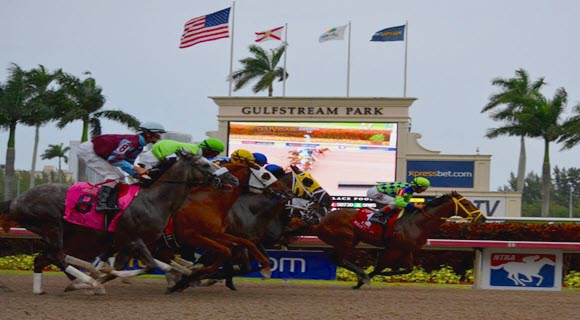 Gulfstream Park Entrance
For newcomers to horse racing, the Pegasus World Cup represents an exciting and high-stakes entry point into one of the sport's premier events. Held each January at Gulfstream Park in Florida, this Grade I Thoroughbred race attracts elite competition and massive wagering interest early in the calendar year.
With a rich tradition for drama and unpredictability, the Pegasus World Cup combines competitive racing with a festive atmosphere that appeals to casual fans and serious bettors alike.
Understanding the fundamentals of how the race unfolds and how to approach your first day of betting can transform your experience from overwhelming to rewarding. In this guide, we break down clear strategies and insights to help first-time bettors navigate the Pegasus card with confidence.
Understanding the Pegasus World Cup and Its Unique Dynamics
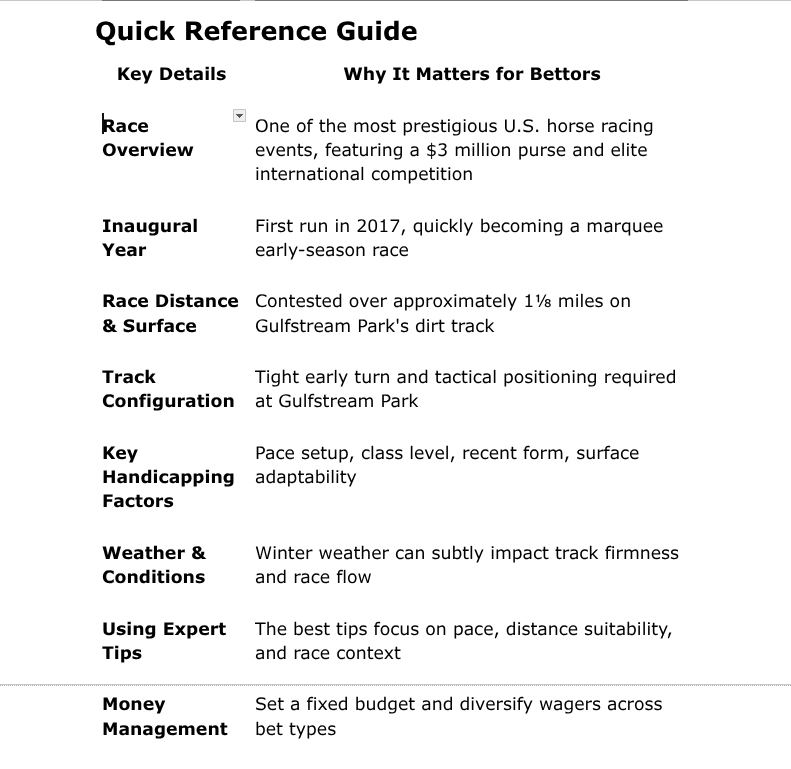
The Pegasus World Cup stands out as one of the most prestigious horse racing events on the U.S. calendar, boasting a $3 million purse and a competitive field comprised of top racing talent from around the world.
First run in 2017, the race quickly grew into a marquee early-season contest that energises enthusiasts during a quieter part of the racing year. In its current format, the race is contested over about 1⅛ miles on Gulfstream Park's dirt surface, a distance that tests both speed and stamina equally.
For first-time bettors, appreciating these unique race dynamics is critical. Horses that handle this trip effectively and adapt to Gulfstream's configuration often have an edge, especially when combined with professional handicapping factors such as pace projections and class assessments.
By grounding your approach in these race-specific characteristics, you position yourself to evaluate contenders more accurately and find value in the betting pools.
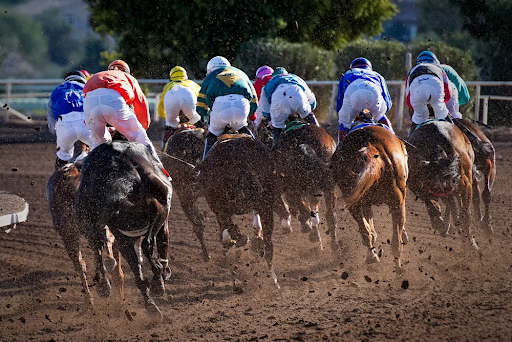 Racing on a dirt surface
Strategic Handicapping: The Pegasus Decision Framework
When preparing your first wagers on the Pegasus World Cup, adopting a structured handicapping approach pays dividends. Look beyond recent wins and headlines to assess each horse's suitability for this unique challenge.
Evaluating recent form against similar competition helps gauge readiness for the race's high stakes, while analysing pace scenarios reveals how the early fractions of the contest might unfold.
Those familiar with Pegasus World Cup tips will note the emphasis on breaking down these variables systematically rather than reacting impulsively to odds or media narratives. By combining pace distribution, surface adaptability, and form patterns, new bettors can develop clearer insights into how the race may unfold on race day.
Track configuration at Gulfstream Park demands tactical positioning early on; the first turn comes quickly, and good spots often set up contenders for the stretch run. Weather and surface conditions also play a part, with winter winds or temperature swings subtly affecting the dirt track's firmness and how horses respond during the race.
Watch the race unfold in the 2024 renewal - notice how, at the start, the eventual winner, favourite National Treasure, moves quickly across to the inside rail to take up a position just behind the leader. In this position, he could relax until the final bend from which he was able to use his finishing speed to surge into the lead.
Your Pegasus Handicapping Checklist
Use this framework to evaluate each contender systematically:
✓ Recent Form & Class Level
Look for horses that have competed in Grade I or Grade II stakes within their last three races. Strong finishes against quality fields matter more than winning against weaker competition.
✓ Pace Profile & Racing Style
Identify whether the horse typically runs on the early lead, stalks the pace, or closes from behind. At Gulfstream's 1⅛-mile distance, versatile runners who can adapt to different pace scenarios often have an edge.
✓ Gulfstream Park Experience
Has the horse raced successfully at Gulfstream before? Familiarity with the tight turns and surface characteristics can translate into better positioning and confidence.
✓ Distance Suitability
Review past performances at 1 mile to 1⅛ miles. Horses stepping up or down significantly in distance carry more risk than those with proven stamina at this trip.
✓ Post Position
Inside posts (1-4) require quick breaks to avoid trouble on the first turn, while outside posts (10+) may force jockeys to use extra energy early to secure position. Middle posts (5-9) often provide the most tactical flexibility.
 Gulfstream Park Race Track
Applying the Framework: A Simple Example
Let's compare two fictional contenders to see how this checklist works in practice:
Horse A - "Thunder Road"
- Recent form: Won a Grade II at 1 mile, second in Grade I Kentucky prep
- Pace profile: Early speed, likes to set the pace
- Gulfstream record: 2-1-0 in three starts at the track
- Distance: Untested beyond 1 mile
- Post position: 3
Horse B - "Steady Eddie"
- Recent form: Third in Grade I, won an allowance race before that
- Pace profile: Mid-pack stalker, strong late kick
- Gulfstream record: Never raced here
- Distance: Won at 1⅛ miles twice, placed at 1¼ miles
- Post position: 7
Quick analysis: Thunder Road brings tactical speed and track familiarity, but the distance stretch is a question mark. Steady Eddie has proven stamina and an ideal post, but lacks Gulfstream experience. If the pace looks fast (multiple speed horses), Steady Eddie's closing style becomes more appealing. If the pace looks moderate, Thunder Road's familiarity with the track might be decisive.
This simple comparison shows how beginners can move beyond odds and media buzz to make informed selections based on race-specific factors.
How to Use Pegasus World Cup Tips Effectively
One of the most essential pieces of advice for first-time bettors is to understand how to apply Pegasus World Cup tips, not just read them. A good tip should offer actionable insight grounded in data and race context, not just a prediction of a favourite.
For example, professional guidance often highlights factors like pace setup, preferred racing lanes, and performance at similar distances. Incorporate this information into your selection process by assessing how each horse's recent races align with what the Pegasus presents.
Avoid over-reliance on media hype or most popular choices; sometimes value lies in less obvious contenders whose recent workouts and surface fit indicate potential for a breakthrough performance.
Integrating expert tips with your own analysis strengthens your overall wagering strategy and helps you avoid common pitfalls like betting based solely on recent publicity. Intelligent use of Pegasus World Cup tips becomes a learning experience that builds your confidence and sharpens your long-term handicapping skills.
Bet Types and Money Management Strategies for First-Timers
Exploring betting options thoughtfully can enhance both the excitement and the potential return of your first Pegasus World Cup experience.
While straight win bets are straightforward and ideal for beginners, exotic wagers, such as exactas, trifectas, and superfectas, offer higher payouts and encourage deeper engagement with race dynamics.
Understanding the cost and overall profile of each bet type is vital; exotics typically require careful selection across multiple horses but can transform small stakes into significant returns when executed intelligently.
Effective money management also plays a crucial role. Set a clear budget for your wagering activity based on the entertainment value rather than the expectation of guaranteed returns, and allocate portions of that budget toward diversified bet types.
Track your outcomes and learn from both wins and losses; the best bettors continually reevaluate their approach with each new race. By pairing sensible financial habits with strategic bet selection, you cultivate discipline and maximise enjoyment of the sport.
At the time of writing, the official field for the 2026 Pegasus World Cup hasn't been announced yet. The race is scheduled for Saturday, January 24th, 2026, and entries typically aren't finalised until about a week before the race.
However, early odds and potential contenders are already being discussed by betting sites. Some early favourites mentioned include:
- White Abarrio - The 2025 Pegasus World Cup winner headlines the early market, currently at +450 odds, with excellent Gulfstream Park familiarity
- Locked - Trained by Bob Baffert and positioned at +600, he's emerging as one of the best older dirt runners after winning the Grade 1 Awesome Again Stakes
- Saudi Crown - Continues to attract backing thanks to tactical speed and a strong record on fast tracks
The official entry list with all confirmed runners, post positions, and jockeys will be released closer to race day, typically around January 20-22, 2026.
If you're planning to bet, I'd recommend checking back with Gulfstream Park's official website, major racing platforms or the Pegasus World Cup website in mid-January for the confirmed field.
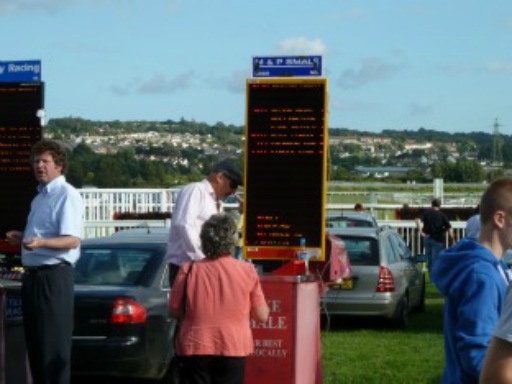 On course Bookmakers
Pegasus World Cup Tips for First Time Horse Racing Bettors in 7 Steps
Ready to place your first wager? Follow this straightforward process to go from curious beginner to confident bettor:
Step 1: Choose Your Betting Platform
Select a legal, licensed betting platform available in your jurisdiction. Popular options include FanDuel Racing, TVG, TwinSpires, and BetMGM. Download the app or visit the website, create an account, and deposit funds using your preferred payment method. Most platforms offer new-user bonuses that can stretch your initial bankroll.
Step 2: Review the Full Field
Once the final field is announced (usually a day or two before the race), review the entries. Most platforms provide detailed information, including jockey, trainer, morning-line odds, and recent running lines. Don't rush this step—spend 15-20 minutes familiarising yourself with the contenders.
Step 3: Apply Your Handicapping Checklist
Use the Pegasus Handicapping Checklist from earlier to narrow the field to 2-4 horses that fit your criteria. Focus on horses with solid recent form, proven distance ability, and favourable post positions. Jot down your top picks and the specific reasons you like them.
Step 4: Check the Odds and Look for Value
Review the live odds on race day. If your top pick is heavily favoured (2-1 or lower), consider whether the potential return justifies the risk. Sometimes, a contender at 8-1 or 12-1 with strong fundamentals offers better betting value than a short-priced favourite.
Step 5: Select Your Bet Type
For your very first wager, start simple:
- Win bet: Your horse must finish first
- Place bet: Your horse must finish first or second
- Show bet: Your horse must finish first, second, or third
Once comfortable, explore basic exotics like exactas (pick the top two finishers in order) or exacta boxes (pick two horses to finish 1-2 in any order).
Step 6: Determine Your Wager Amount
Stick to your predetermined budget. Never bet money you can't afford to lose. A good rule of thumb: allocate no more than 20-30% of your total bankroll to any single race, and diversify across multiple bet types.
Step 7: Place Your Bet and Enjoy the Race
Navigate to the Pegasus World Cup race on your platform, select your bet type, choose your horse(s), enter your wager amount, and confirm. Double-check all details before submitting. Then sit back and enjoy the thrill of the race!
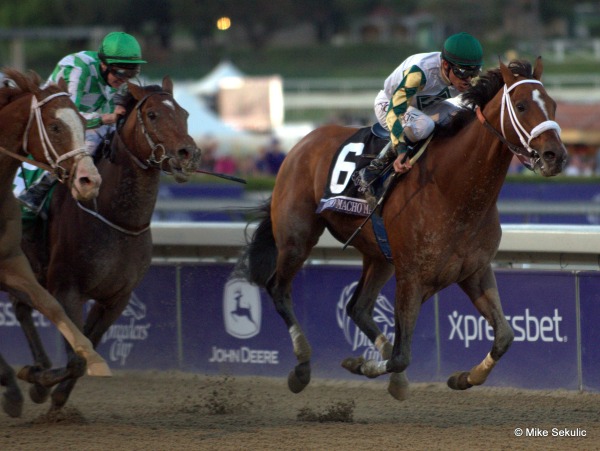 Mucho Macho Man whose 4-year-old son Mucho Gusto won the Pegasus World Cup
Sample Betting Tickets for Small Budgets
Not sure how to structure your bets? Here are three practical examples for first-timers working with modest bankrolls:
$10 Conservative Ticket
- $5 Win on Horse #4 (your top pick at 7-2 odds)
- $3 Place on Horse #7 (solid value play at 9-1)
- $2 Show on Horse #4 (insurance on your top choice)
Strategy: This ticket prioritizes your strongest opinion while hedging slightly. If Horse #4 wins, you collect on both the win and show bets. The place bet on Horse #7 gives you a secondary chance at a return.
$20 Balanced Ticket
Strategy: This ticket balances straight wagering with exotic bets that offer bigger payouts. You've covered your top pick multiple ways while giving yourself upside through exactas and a trifecta.
- $6 Win on Horse #6 (your top selection)
- $6 Exacta Box: Horses #6 and #9 ($3 for each combination)
- $4 Exacta Box: Horses #6, #9, and #2 ($4 covers six combinations at $0.67 each, rounded)
- $4 Trifecta: #6 with #9, #2, #11 with #9, #2, #11 (covers multiple trifecta outcomes)
$25 Aggressive Exotic Ticket
- $5 Exacta Box: Horses #3, #6, and #8 (covers six combinations)
- $10 Trifecta Box: Horses #3, #6, and #8 (covers six combinations)
- $10 Superfecta: #6 with #3, #8 with #3, #8, #11 with ALL (a partial superfecta focusing on your top picks)
Strategy: This ticket skips straight bets entirely and focuses on exotics with higher potential payouts. Best suited for bettors comfortable with more risk who've identified 3-4 strong contenders and want to maximize returns if their picks hit.
Making the Most of the Pegasus World Cup Experience
Attending or watching the Pegasus World Cup offers more than just wagering opportunities; it's a chance to immerse yourself in the spectacle of top-tier horse racing.
Whether you're at Gulfstream Park in person or watching from home, embrace the full experience: study the paddock to observe horses before the race, listen to expert commentary, and engage with fellow racing fans.
The social and visual elements of racing add depth to your understanding and make wins more satisfying and losses easier to absorb.
Pegasus World Cup Tips for First Time Horse Racing Bettors Conclusion
Ready to Jump In?
Look, the Pegasus World Cup is honestly one of the best places to dip your toes into horse racing. Yes, it's a big prestigious race, but that's exactly what makes it so exciting for your first bet.
The cool thing is, you don't need to be an expert right out of the gate. Just follow the basics we've covered—check the horses using that simple handicapping checklist, set a budget you're comfortable with, and walk through those seven steps when you're ready to place your bet. Before you know it, what seemed complicated will start clicking into place.
Here's the real secret: this race is just the beginning. Whether your horse crosses the wire first or you're watching from the back of the pack, you're learning something valuable every single time. Start with small bets, don't chase losses, and soak it all in.
Win or lose, you're building skills that'll make every future race more fun and a whole lot less mysterious. Plus, there's nothing quite like the rush when your horse comes thundering down the stretch—especially when you've got a ticket riding on it.
So grab your bankroll, pick your contenders, and enjoy the ride. Welcome to horse racing!
Recent Articles


-
The Lucky 15 Bet: A Popular Multiple Bet Strategy
Oct 11, 26 05:10 AM
 The Lucky 15 Bet: A popular multiple bet strategy that can pay out even if only one selection wins, consisting of 15 different combinations
 -
Greyhound Racing Locations For Stadia Throughout The UK
Oct 10, 26 04:14 AM
 Finding greyhound racing locations around the UK is quick and easy with this guide to dog tracks around the country
 -
South African Horse Racing Tips With Trainer, Jockey & Horse Data
Oct 10, 26 04:02 AM
 South African horse racing is becoming much better known and punters worldwide can learn more about the race tracks, trainers, jockeys, horses and races