Horse Racing Tips and Track Analysis
Horse Racing Tips and Track Analysis: Going, Speed Figures and Track Quirks
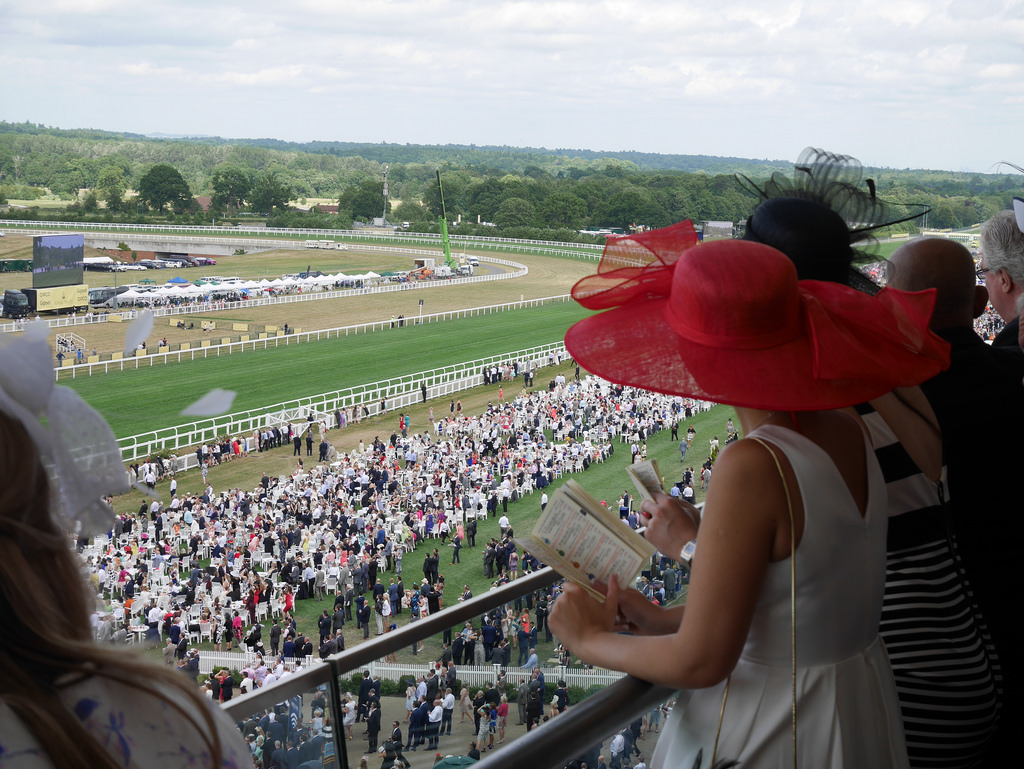 Ascot Racecourse
Racing is fast, noisy and packed with history, and the real work happens long before the horses even reach the parade ring. Serious punters are already deep in the race card, checking past runs, the shape of the track and the breeding.
Every horse has its own way of going about things. Some jump out and make all the running. Others sit at the back, save a bit in the tank, and pounce in the last furlong.
To pick winners, you have to look past the hype on the day. A horse that bolts up by five lengths on fast summer turf can look like a different animal when autumn rain turns the course to treacle.
Surface, turf texture and the way the track bends all matter more than most people think. Honestly, studying form is part maths and part patience. Once you can read the figures and understand what jockeys are trying to do, the race card stops looking like a wall of numbers and starts looking like a map.
The Going: Why Ground Conditions Decide So Much
The "going" is simply how much give there is in the ground. Soft going tests stamina and guts. Fast ground tests raw speed and acceleration.
In Britain, going is described on a scale running from Hard, Firm, Good to Firm, Good and Good to Soft, down to Soft and Heavy. Ireland and France use their own wording, so "Yielding" over there is roughly what we'd call Good to Soft.
Trainers know exactly what ground suits each horse in the yard. Big, heavy types often hate firm ground because the jarring can be tough on their joints. Lighter, free-moving horses skate over dry turf and burn less energy keeping up their stride. If you check how much rain fell at the course overnight, you're already a step ahead of the casual crowd.
While you're waiting for the runners to load into the stalls, there's usually a few spare minutes. Most racegoers use them to scroll through track news or check for late jockey changes, and some like to unwind with a bit of online entertainment before the starter raises the flag. Once the gates open, though, it's the ground under the hooves that tells the real story.
Horse Racing Tips and Track Analysis: What to Look at First
Every decent bit of form study starts with a handful of basics from the form book:
- Speed figures: Raw times get adjusted for distance and how quick the ground was that day, so you can compare runs fairly.
- Class drops: A horse stepping down from a top race to a lower-grade handicap often finds life much easier.
- Trainer form: A yard's strike rate over the last fortnight tells you whether the horses are running well and in good health.
- Weight allowances: Apprentice jockeys claim weight off the horse's back, usually 3, 5 or 7 lb depending on how many winners they've ridden. A few pounds can make a real difference in a tight finish.
You can find much of this information in my article, Racing Post User Guide.
Track Types Side by Side
Courses come in all shapes and sizes. Some are flat and wide with long home straights, which suit horses that want to build momentum late on. Others have tight bends and downhill stretches where front-runners nick a lead and never get reeled in.
Here's a quick cheat sheet of the main track types, what the ground is usually like, and which running style tends to thrive on each:
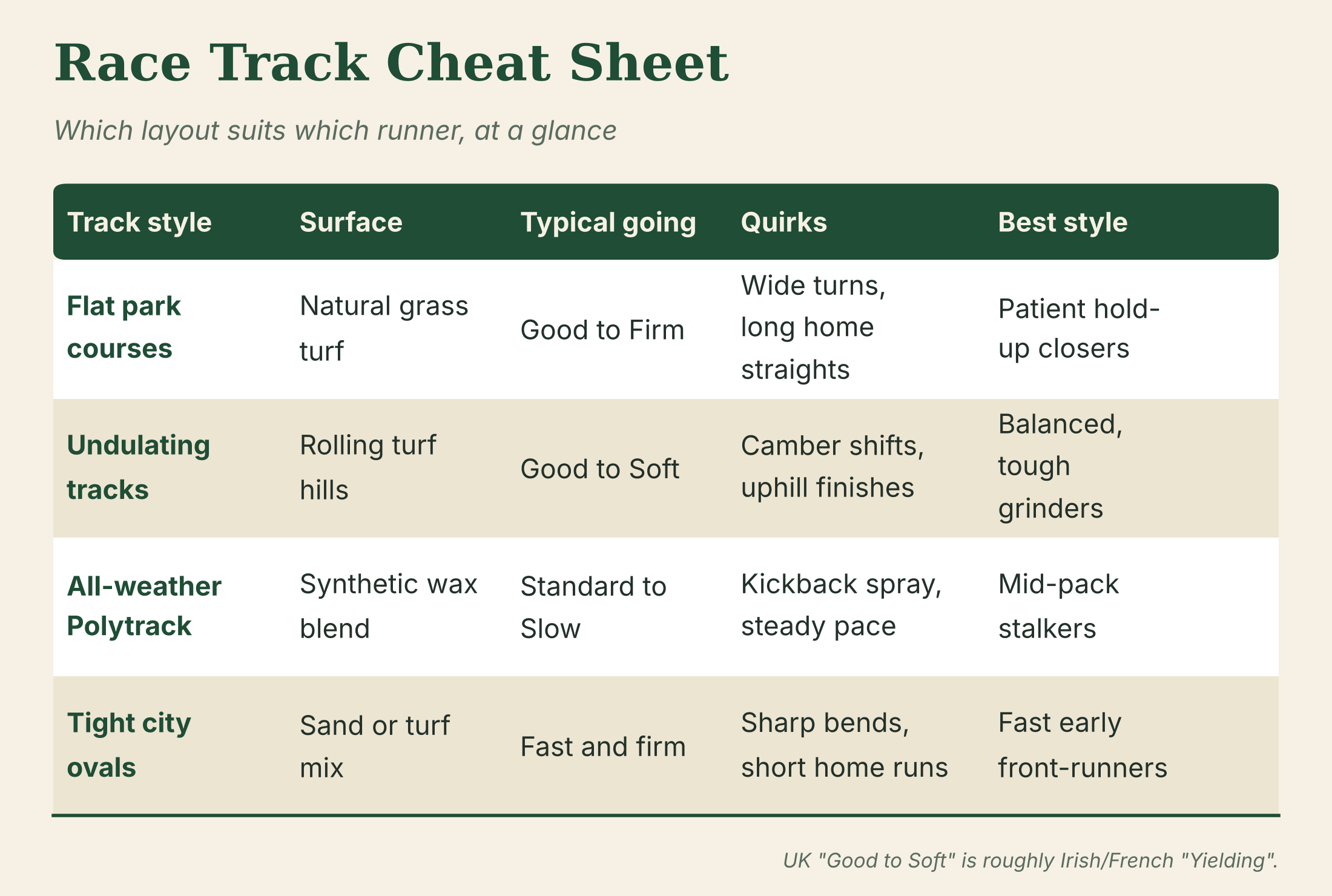
A few well-known examples show how this plays out. Newmarket is the classic wide-open, galloping track where a strong stayer can build up speed. Goodwood and Epsom have plenty of undulations (Epsom's famous downhill run to Tattenham Corner catches out plenty of horses).
 Chester Racecourse
Chester is a tight, left-handed circuit where getting a good early position is half the battle. And on the all-weather, the kickback from the surface means horses stuck at the back get a faceful of sand or wax before they've done a thing.
Habits That Pay Off
Consistent punters tend to have a routine. Here are three worth stealing.
Check the Official Going Reports
Skip the weather forecast for a town ten miles away. Look at the going stick readings the clerk of the course posts, and keep an eye on updates in the hours before racing. A late change from "Good" to "Good to Soft" can completely rewrite the day.
Study the Jockey's Course Record
Some jockeys just get certain tracks. They know where the ground dries out first along the rail and where the bend opens up for a run on the inside. A top local rider can pick up a couple of lengths purely through course knowledge.
Watch for Draw Bias in Sprints
In a five-furlong sprint, the stall number can matter a lot. If the rail has the better ground, horses drawn low have less ground to cover. Watch the first couple of sprints on the card to see which side of the track is running fastest, and keep an eye on how big the field is, because the effect changes with numbers.
Keep It Reasoned and Keep It Fun
Racing rewards people who respect the details. Track the ground, weigh up the trainer form, and balance the odds sensibly, and each race day turns into a puzzle worth solving. Stick to your rules, keep your picks reasoned, and you'll enjoy the sport of kings with a clear head and a bit of confidence.
And if you bet, only stake what you can afford to lose. If it stops being fun, BeGambleAware is there to help.


Returns Policy: Once a customer has agreed to pay for a product or service no returns will be permitted or payments returned.
All PayPal transactions are subject to the PayPal Privacy Policy
Privacy Policy: Personal details provided to this site by an individual may be shared with third parties unless requested otherwise.
Above policies updated 15 March 2018
Recent Articles


-
Horse Racing Tips and Track Analysis: Going, Speed Figures & Tracks
Nov 12, 26 10:17 AM
 Horse racing tips and track analysis: Learn how going, speed figures, draw bias and course quirks shape race results, with a handy track-type cheat sheet to help you read any race card
-
The Lucky 15 Bet: A Popular Multiple Bet Strategy
Nov 12, 26 04:54 AM
 The Lucky 15 Bet: A popular multiple bet strategy that can pay out even if only one selection wins, consisting of 15 different combinations
-
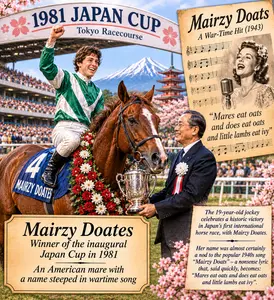
Japan Cup History Mairzy Doates
Nov 12, 26 04:47 AM
 Japan Cup History Mairzy Doates: how a 1981 experiment, won by a sore-ankled American mare called Mairzy Doates, grew into one of the world's great races.