Dutching For Profit
Dutching For Profit: Your Guide to Backing Multiple Horses and Actually Winning
Ever wondered how to bet on more than one horse in a race and still walk away with a profit when one of them romps home? That's dutching, mate – and it's about to become your new best friend.
Dutching in 60 Seconds
Here's the quick version of how it works:
- Pick your horses – Choose 2-3 selections you fancy in the same race
- Grab the odds – Note down the decimal odds for each horse
- Decide your approach – Equal profit across all winners, or equal return?
- Work out your stakes – Use a calculator to split your total stake
- Round your stakes – Adjust to meet minimum stake requirements
- Double-check everything – Make sure the maths adds up
- Place your bets – Get them on before the off
- Keep records – Track what works (and what doesn't)
Why Bother Dutching?
Look, tipsters rarely tell you to back multiple horses. But here's the thing – dutching seriously boosts your strike rate and cuts down those soul-destroying losing runs.
With standard win singles, you're looking at maybe 20-30% winners if you're doing well. That's only 2 or 3 wins out of 10 bets. A few bad runs and your betting bank – not to mention your confidence – takes a proper battering.
Once you get the hang of dutching, your turnover increases and so does the speed at which your bankroll grows. Simple as that.
How to Calculate Your Stakes
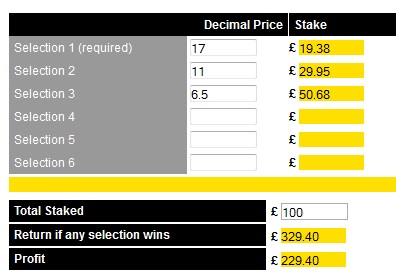
The easiest way? Use a dutching calculator like the one below.
It's dead simple:
- Enter the odds for each of your selections
- Pop in your total stake for the race
- The calculator spits out exactly how much to bet on each horse
Boom – you're guaranteed a profit regardless of which selection wins.
See the video below for how to use our FREE Dutch Decision Analyser.
🏇 Dutch Decision Analyzer
Enter your race details and get instant BET/SKIP recommendations
💡 Enter at least 2 horses. Leave others blank if not needed.
📚 Based on your race type research (e.g., 76.3% for 2m hurdles)
Winning Percentages for Various Race Types
Race Type Expected % My Experience
2m Hurdles 77.0% ✅ Proven winner
Flat 7f-1m 72.5% Good
2m Chases 71.5% Good
AW 7f-1m 71.0% Good
AW 5f 64.0% ❌ Not successful
AW 6f 65.5% ❌ Not successful
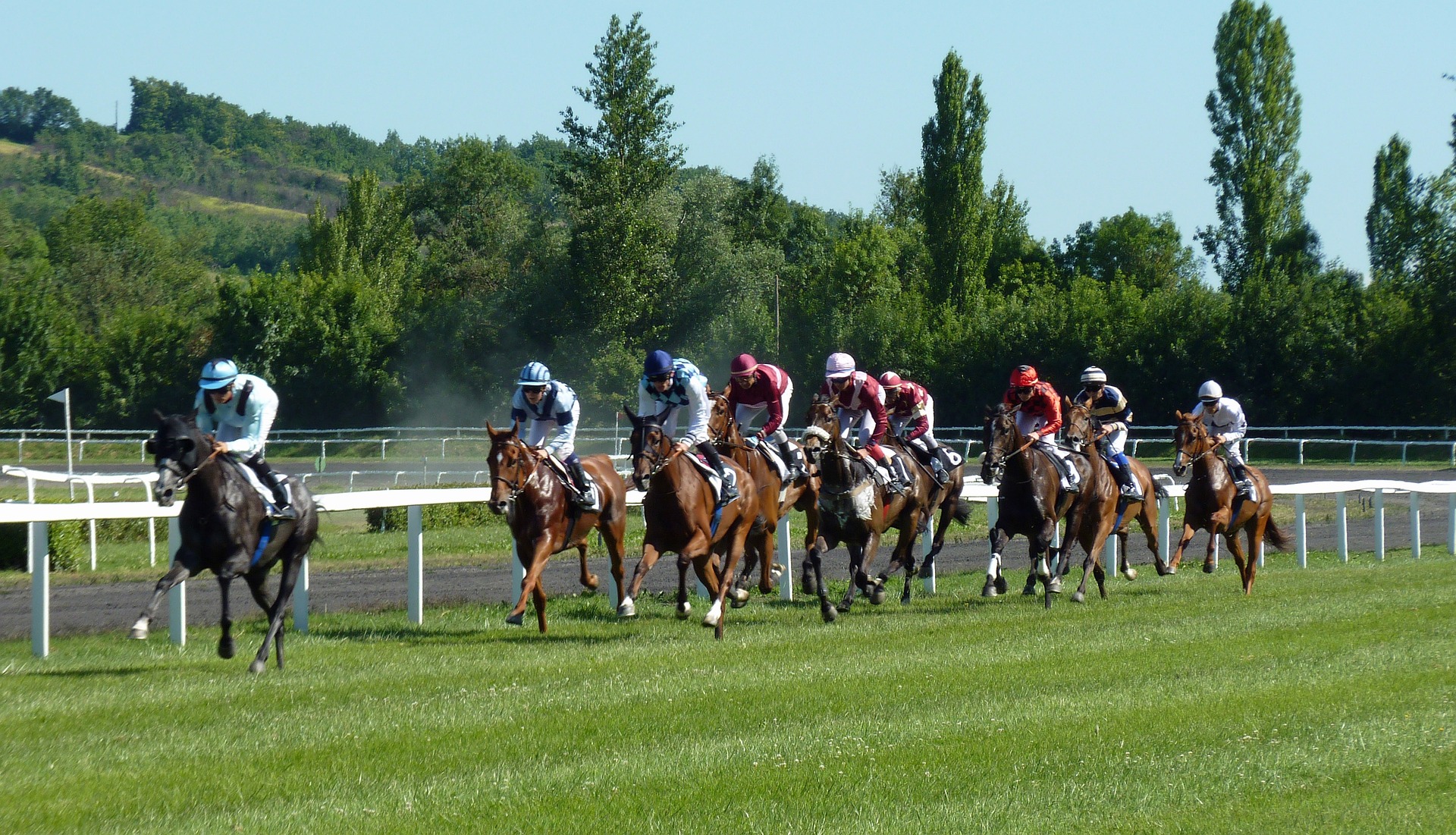 Horse racing on turf
 Cheltenham Winners Enclosure
But before you start, read below about the Overlay System
Pro tip: If you fancy automating the whole process, check out BF-Bot Manager. They do a free trial, and it's proper useful for getting your bets on quickly.
The Dutch Overlay System: Finding Value Bets
Right, this is where it gets interesting. You can't just dutch any old race – the odds need to be big enough to actually make you money.
Michael Wilding from RaceAdvisor came up with a cracking method called the Dutch Overlay. Here's how it works:
An overlay happens when you reckon a horse's chances are better than what the market thinks. Say you believe it's got a 75% chance of winning, but the odds suggest only 50% – that's an overlay.The Numbers You Need to Know
Stats show that in any horse race:
- The favourite wins about 35% of the time
- Second favourite wins 20%
- Third favourite wins 14%
Add those together, and the top 3 in the market have a 69% chance between them.
Finding the Right Races
To keep things simple when you're starting out, focus on three things:
- Distance
- Going
- Number of runners
For example, you might target 7f races on firm going with 8-9 runners. Historical data shows that in these specific conditions, the top 3 favourites have a 76.3% winning chance – higher than the general 69%.
Once you're comfortable, you can layer on other factors like form, trainer, jockey, whatever floats your boat.
Working Out Your Edge
Here's the process:
- Find races matching your criteria – 7f, firm going, 8-9 runners (or whatever conditions you're tracking)
- Check the odds near the off – Grab the decimal odds for the first 3 favourites
- Convert odds to percentages – Use this formula: % = (1 ÷ decimal odds) × 100
- Add them up – If the total is less than 76.3%, you've potentially found value
- Factor in commission – If you're on the exchanges, add about 5% for safety
So you're really looking for a combined percentage of 66.3% or less to give yourself a decent 10% edge.
A Real Example
Let's say you find a race where:
Selection Decimal Odds Percentage
Favourite 3.0 33.33%
2nd Favourite 5.0 20%
3rd Favourite 8.0 12.5%
TOTAL 65.83%
The market's saying these three horses have a 65.83% chance between them. But we know from our stats it should be 76.3% for these race conditions.
That's value right there.
Punch those odds into your dutching calculator, work out the stakes, and you're looking at a potential 51.9% ROI. Not bad for a race where you're backing three horses!
The Formula Behind It All
For the maths geeks out there, here's what's actually happening:
Stake per selection = (Total stake × Individual probability) ÷ Total probability
Or in plain English: you're dividing your total stake in proportion to each horse's chances, so that any winner delivers the same profit.
A worked example makes this clearer. Let's say you've got £100 to stake across those three horses from earlier:
Horse Odds Probability
Stake Return if Wins
Horse A odds 3.0 = 33.33% stake £50.62 £151.86 Profit £51.86
Horse B odds 5.0 = 20% stake £30.37 £151.85 Profit £51.85
Horse C odds 8.0 = 12.5% stake £18.99 £151.92 Profit £51.92
Total 65.83% £100
See how each winner gives you roughly the same profit? That's dutching working its magic.
Common Pitfalls (And How to Avoid Them)
Before you rush off to place your first dutch bet , watch out for these gotchas:
- Rounding stakes – Make sure your rounded stakes still add up correctly
- Minimum stake limits – Some bookies won't take tiny stakes
- Rule 4 deductions – Non-runners can mess up your calculations
- Dead heats – Your stake gets split if two horses tie
- Voided bets – If a horse is withdrawn, your whole dutch can fall apart
- Each-way complexity – Dutching each-way bets is a whole different beast
- Price movements – Odds can shift between calculating and placing
- Poor record-keeping – Track everything or you won't improve
Does Dutching Guarantee Profit?
Let's be clear about something important: dutching doesn't create value on its own. It just distributes your stake efficiently across multiple selections.
You still need to find the actual edge – that overlay where your assessment of the horses' chances is better than what the market thinks. Dutching is the tool that lets you exploit that edge properly.
Think of it this way: dutching helps you bet smarter when you've found value, but it won't magically turn bad bets into good ones.
The Reality Check
Okay, you won't always find odds as juicy as that 51.9% ROI example. But as you get more experienced with the Dutch Overlay method, you'll spot patterns and fine-tune your approach.
The beauty is that even modest edges compound over time. A consistent 5-10% advantage across dozens of races? That adds up fast.
Your Next Steps
Fair warning – the odds in the example above are pretty generous. Real racing is tougher. But stick with it, keep detailed records, and gradually refine your criteria as you learn what works.
Maybe you'll find that 6f races on good-to-soft with 10 runners are your sweet spot—or perhaps all-weather evening meetings on Fridays. The point is to track, learn, and adapt.
The more races you analyse, the better you'll get at spotting genuine overlay situations. And that's when dutching really starts to pay dividends.
 Dutching Horse Races
Dutching FAQ
Frequently Asked Questions About Dutching
🎯 THE BASICS
Q: What is dutching in horse racing?
A: Dutching is a betting strategy where you back multiple horses in the same race with calculated stakes that guarantee the same profit regardless of which selection wins. Instead of putting £100 on one horse, you might put £45 on Horse A, £32 on Horse B, and £23 on Horse C – and make £50 profit if any of them wins.
Q: Does dutching guarantee profit?
A: No. Dutching guarantees equal profit if one of your selections wins, but it doesn't guarantee a win. If none of your horses come in, you lose your entire stake. The key is finding races where you have a genuine mathematical edge (overlay).
Q: How is dutching different from backing singles?
A: Backing singles:
- One horse, full stake
- Higher profit if it wins
- 20-30% typical strike rate
- More volatile
Dutching:
- Multiple horses, split stake
- Lower profit per win
- 60-70% typical strike rate
- More consistent
Think of it as: singles = high risk/high reward, dutching = managed risk/steady returns.
Q: Is dutching the same as an each-way bet?
A: No, completely different:
Each-way: Single horse, two bets (win + place), fixed returns
Dutching: Multiple horses, all to win, calculated stakes for equal profit
Each-way bets are simpler but less flexible. Dutching gives you more control over your selections and profit distribution.
💰 THE MATHEMATICS
Q: How do I calculate dutching stakes?
A: Use this formula:
Stake per horse = (Total Stake × Individual Probability) ÷ Total Probability
Where:
- Individual Probability = 1 ÷ Decimal Odds
- Total Probability = Sum of all individual probabilities
Example:
- Total stake: £100
- Horse A @ 4.0 (25% probability)
- Horse B @ 5.0 (20% probability)
- Total probability: 45%
Stakes:
- Horse A: (£100 × 0.25) ÷ 0.45 = £55.56
- Horse B: (£100 × 0.20) ÷ 0.45 = £44.44
Or just use our free calculator! 🧮
Q: What's an overlay and why does it matter?
A: An overlay is when your expected win probability exceeds the market's implied probability.
Example:
- Market says top 3 have 67% chance (based on odds)
- Your research says they have 76% chance
- Overlay: 9%
This 9% is your mathematical edge. Without an overlay, you're just gambling. With it, you have a long-term advantage.
Q: What's a good overlay percentage?
A:
- 7-10%: Minimum for dutching, solid edge
- 10-15%: Strong value, bet with confidence
- 15%+: Excellent value, rare but powerful
- Below 7%: Too thin, skip and wait for better
After accounting for commission/margins, aim for at least 7% to ensure a genuine edge.
Q: How do I find my expected probability?
A: Research historical data for specific race conditions:
- Choose race criteria (e.g., 2-mile hurdles, good-soft going, 8-10 runners)
- Analyze 100+ similar races
- Calculate how often top 3 favourites won
- That's your expected probability
General benchmarks:
- Flat racing 6-7f: ~69%
- Jump racing 2m: ~77%
- Handicaps: ~72%
- Conditions races: ~75%
Build your own database for best results.
🎯 STRATEGY & SELECTION
Q: How many horses should I dutch?
A: 2-3 horses is optimal, occasionally 4-5.
Why:
- 2 horses: Higher profit per win, but lower coverage
- 3 horses: Sweet spot – good coverage, decent profit
- 4-5 horses: Maximum coverage, but profits shrink
- 6+ horses: Not recommended – profit too diluted
Most successful dutchers stick to 3 selections.
Q: Should I always dutch the top 3 favourites?
A: Usually, but not always. The key is finding value, not just backing favourites.
Dutch the top 3 when:
- Combined odds give 60-70% market probability
- You have 7%+ overlay based on research
- All horses have odds of 3.0 or higher
- No odds-on favourite present
Consider alternatives when:
- Market has overpriced them (>80% probability)
- An odds-on favourite dominates
- Your research suggests different selections
Q: Can I dutch on the Betfair Exchange?
A: Absolutely! In fact, exchanges are often better for dutching:
Pros:
- Better odds (no bookmaker margin)
- More liquidity for larger stakes
- Can lay horses (advanced strategy)
- Transparent market
Cons:
- Commission (2-5% typically)
- Need to account for commission in overlay calculations
- Slightly more complex interface
Tip: Add 5% to your minimum overlay requirement when dutching on exchanges to account for commission.
Q: What about Rule 4 deductions?
A: Rule 4 applies when a horse is withdrawn and can reduce your winnings.
How it affects dutching:
- Your carefully calculated stakes get disrupted
- Returns are reduced by the deduction percentage
- Profit margins shrink
Protection strategies:
- Buffer your overlay – Need 10%+ instead of 7%
- Avoid races with non-runner risk (small fields, doubtful runners)
- Bet closer to the off when declarations are final
Factor in 10-15% safety margin for competitive races
Q: How do I handle dead heats?
A: In a dead heat, your stake is split between the tied horses.
Example:
- You backed Horse A with £50 at 4.0
- Horse A dead-heats with another horse
- Your £50 becomes £25 winning stake
- Return: £25 × 4.0 = £100 (not £200)
- Profit: £50 instead of £150
Dutching impact: If one of your dutched horses dead-heats, you'll make less profit but still win. It's frustrating but part of the game.
💼 BANKROLL & RISK
Q: How much should I stake per dutch?
A: Never more than 2% of your total bankroll per race.
Examples:
- £500 bankroll → £10 max per dutch
- £1,000 bankroll → £20 max
- £5,000 bankroll → £100 max
This protects you from bad runs and allows your edge to play out over time.
Q: What if I hit a losing streak?
A: Losing streaks are normal and expected:
Reality check:
- 70% strike rate = 30% of bets lose
- You could lose 5-6 dutches in a row (rare but possible)
- This is variance, not system failure
What to do:
- Review your bets – Were they genuine 7%+ overlays?
- Check your calculations – Any stake errors?
- Stay disciplined – Don't chase losses with bigger stakes
- Trust the math – 100+ bets needed to evaluate properly
- Take a break if emotional
Never increase stakes during a losing run.
Q: Can I make a living from dutching?
A: It's possible but challenging:
Requirements:
- Large bankroll (£10,000+ minimum)
- Consistent 7-10% overlays
- 50-100 bets per month
- Excellent discipline
- Time for research
- Multiple bookmaker accounts
Realistic expectations:
- Hobbyist (£500 bankroll): £50-100/month
- Serious (£5,000 bankroll): £250-500/month
- Professional (£50,000 bankroll): £2,500-5,000/month
These assume 5-7% long-term ROI, which is excellent but not guaranteed.
🛠️ TOOLS & PRACTICAL
Q: Do I need special software?
A: Not essential, but helpful:
Free options:
- Our calculator (above)
- Oddschecker dutching calculator
- Excel spreadsheet (DIY)
Premium options:
- BetAngel (£10-50/month)
- Gruss Betting Assistant (one-time £110)
- BF-Bot Manager Free Trial (automation)
Start with free tools. Only upgrade if you're dutching regularly and profitably.
Q: Which bookmakers allow dutching?
A: All bookmakers allow dutching, but some might limit your account if you win consistently:
Friendly bookmakers:
- Betfair Exchange (can't be limited)
- Smarkets (exchange)
- Matchbook (exchange)
Traditional bookies (may limit winners):
- Bet365
- William Hill
- Ladbrokes
- Paddy Power
Strategy: Use exchanges for serious dutching, keep bookie accounts for recreational betting.
Q: Can I automate dutching?
A: Yes, with betting bots:
Popular options:
- BF-Bot Manager (beginner-friendly)
- BetAngel (advanced)
- Gruss (professional)
Pros:
- Place bets in milliseconds
- No human error
- Can monitor 24/7
Cons:
- Learning curve
- Costs money
- Still need to identify value
- Risk of technical issues
Recommendation: Master manual dutching first, then consider automation.
🚫 COMMON MISTAKES
Q: What are the biggest dutching mistakes?
A: The top 10 killers:
- Dutching without overlay – Just splitting stakes randomly
- Ignoring commission – Forgetting exchange fees
- Odds-on favourites – Killing your profit potential
- Poor record keeping – Can't learn from mistakes
- Rounding errors – Stakes don't add up correctly
- Chasing losses – Increasing stakes after bad runs
- Too many selections – 6+ horses dilutes profit
- High market probability – Dutching at 85%+ is asking for trouble
- No research – Guessing expected probability
- Emotional betting – Ignoring the math
Avoid these and you're ahead of 90% of dutchers.
Q: Why am I not profitable yet?
A: Common reasons:
Not enough bets:
- Need 50+ dutches minimum to evaluate
- Variance dominates small samples
- Could just be unlucky so far
No genuine edge:
- Not finding real overlays
- Dutching anything that "feels" good
- Ignoring the 7% minimum
Execution errors:
- Calculation mistakes
- Wrong stake amounts
- Prices moved after calculation
Discipline issues:
- Betting when no overlay
- Increasing stakes emotionally
- Not tracking properly
Solution: Review every bet, calculate actual overlay, ensure you're finding genuine value.
📈 ADVANCED QUESTIONS
Q: Should I dutch each-way or win-only?
Each-way dutching is exponentially more complex:
- Need to calculate place probabilities
- Stakes split across multiple outcomes
- Reduced odds for places
- More margin for error
Master win dutching first. Once profitable for 6+ months, explore each-way if interested.
Q: Can I combine dutching with other strategies?
A: Yes! Advanced combinations:
Dutching + Laying:
- Dutch your selections
- Lay other horses in the race
- Advanced, needs large bankroll
Dutching + Arbitrage:
- Find price differences between bookies
- Dutch at best available odds
- Requires multiple accounts
Dutching + Hedging:
- Lock in profit if odds shorten
- Reduce risk mid-race (live betting)
- Needs quick reactions
Start simple. Master basic dutching before combining strategies.
Q: How do professionals find overlays?
A: Professional approach:
- Build proprietary models – Custom algorithms analyzing form
- Historical databases – 1000s of races analyzed
- Speed ratings – Time-based performance metrics
- Sectional timing – How horses run at different race stages
- Market watching – Spot when odds are wrong
- Inside information – Stable connections (legal info only)
- Automated scanning – Software finds overlay races
For hobbyists: Focus on one race type, build data manually, find your niche.
Q: What's the best race type for dutching?
A: It depends on your research, but generally:
Best for dutching:
- 2-mile hurdles – Favorites perform consistently
- Handicaps 7f-1m – Competitive but predictable
- Good-soft going – Reduces randomness
- 8-10 runners – Not too big, not too small
Avoid:
- Sprints (5f) – Too chaotic
- Extreme going (heavy/firm) – Unpredictable
- Maiden races – Unknown quantities
- 3+ mile chases – Stamina tests favor underdogs
Find YOUR edge. If you know sprint handicaps inside out, dutch those!
🎓 LEARNING & IMPROVEMENT
Q: How long to become profitable?
A: Realistic timeline:
- Month 1-2: Learning, paper trading, mistakes
- Month 3-4: Small stakes, building data
- Month 5-6: Finding your edge, refining criteria
- Month 6-12: Consistent profitability emerging
- Year 2+: Scaling up, optimizing
Most dutchers quit too early. Give it 100+ real bets before judging success.
Q: Where can I learn more?
A: Best resources:
Free:
- Racing Post (form analysis)
- Timeform (ratings)
- Our complete guide (this article!)
- YouTube tutorials
- Betting forums (be skeptical)
Paid:
- "Fixed Odds Sports Betting" by Joseph Buchdahl
- "Squares & Sharps" by Joseph Buchdahl
- Professional tipster services (research carefully)
- Our Complete Dutching Toolkit (£9.97)
Most important: Track your own bets. Your data is your best teacher.
Q: Should I follow tipsters for dutching?
A: Generally no, for dutching specifically:
Why tipsters don't work well for dutching:
- They give 1-2 selections per race
- Don't provide overlay analysis
- You'd need to find 3rd/4th horses yourself
- Their edge is in selection, not dutching
Better approach:
- Learn to analyze races yourself
- Build your own criteria
- Find your own overlays
- Use tipsters for ideas, not instructions
If using tipsters: Verify their selections pass your overlay criteria before dutching.
⚖️ LEGAL & RESPONSIBLE
Q: Is dutching legal?
A: 100% legal in the UK and most countries.
Dutching is simply a staking strategy. You're placing normal bets, just calculated mathematically. Nothing illegal or against bookmaker terms.
However: Bookmakers may limit your account if you win consistently (but that's their right, not a legal issue).
Q: Do I need to pay tax on winnings?
A: UK: No tax on betting winnings (personal betting only).
Other countries: Check your local laws:
- USA: Yes, gambling winnings are taxable
- Australia: Generally no for recreational betting
- Europe: Varies by country
If professional/business: Different rules apply. Consult an accountant.
Q: What if gambling becomes a problem?
A: Recognize the signs:
- Betting more than you can afford
- Chasing losses desperately
- Lying about betting activity
- Neglecting responsibilities
- Borrowing to gamble
Get help immediately:
- GamCare: 0808 8020 133
- BeGambleAware.org
- GAMSTOP: Self-exclusion tool
- National Gambling Helpline
Dutching should be fun and mathematical, never desperate.
🎯 FINAL QUESTIONS
Q: What's the single most important thing for dutching success?
A: Discipline.
Not the math (calculators handle that).
Not the strategy (it's simple).
Not the bankroll (start small).
Discipline to:
- Only bet when there's genuine overlay
- Never chase losses
- Stick to 2% stakes
- Keep detailed records
- Skip races that don't qualify
Most dutchers fail because they bet when they shouldn't, not because they don't understand the concept.
Q: If you could give one tip to a beginner?
A: Start with paper trading for 20-30 races.
Don't risk real money until you:
- Understand the math completely
- Can identify overlays confidently
- Calculate stakes correctly every time
- Track results properly
- See profitable patterns emerging
Paper trading reveals mistakes without costing money. When you're consistently "profitable" on paper, start with tiny stakes (£2-5) and scale gradually.
Q: Is dutching better than backing singles?
A: Depends on your goals:
Choose singles if:
- You have strong convictions on specific horses
- You want maximum profit per win
- You can handle 70%+ losing bets
- You enjoy the volatility
Choose dutching if:
- You want consistent strike rates (60-70%)
- You prefer mathematical approaches
- You value bankroll stability
- You're building long-term profits
Both can be profitable. Dutching suits systematic bettors; singles suit confident selectors.
💡 STILL HAVE QUESTIONS?
Try our free Dutch Decision Analyzer (above) to see dutching in action!
Or download our Complete Dutching Toolkit for:
- 35+ page detailed guide
- Advanced Excel calculator
- Bet tracking system
- Real race examples
- Lifetime access
Ready to start dutching? Use the analyzer above to check your next race! 🏇
Last Updated: February 2026
Questions? Email us or comment below!

Returns Policy: Once a customer has agreed to pay for a product or service no returns will be permitted or payments returned.
All PayPal transactions are subject to the PayPal Privacy Policy
Privacy Policy: Personal details provided to this site by an individual may be shared with third parties unless requested otherwise.
Above policies updated 15 March 2018
Recent Articles


-
The Lucky 15 Bet: A Popular Multiple Bet Strategy
Sep 17, 26 06:04 AM
 The Lucky 15 Bet: A popular multiple bet strategy that can pay out even if only one selection wins, consisting of 15 different combinations
 -
Daily Lay Tips For Races In The UK And Ireland
Sep 17, 26 06:00 AM
 The free Daily Lay Tips will now only be available on weekends; however, you can subscribe to the full service for just £5 per month, as explained below.
 -
South African Horse Racing Tips With Trainer, Jockey & Horse Data
Sep 17, 26 03:51 AM
 South African horse racing is becoming much better known and punters worldwide can learn more about the race tracks, trainers, jockeys, horses and races